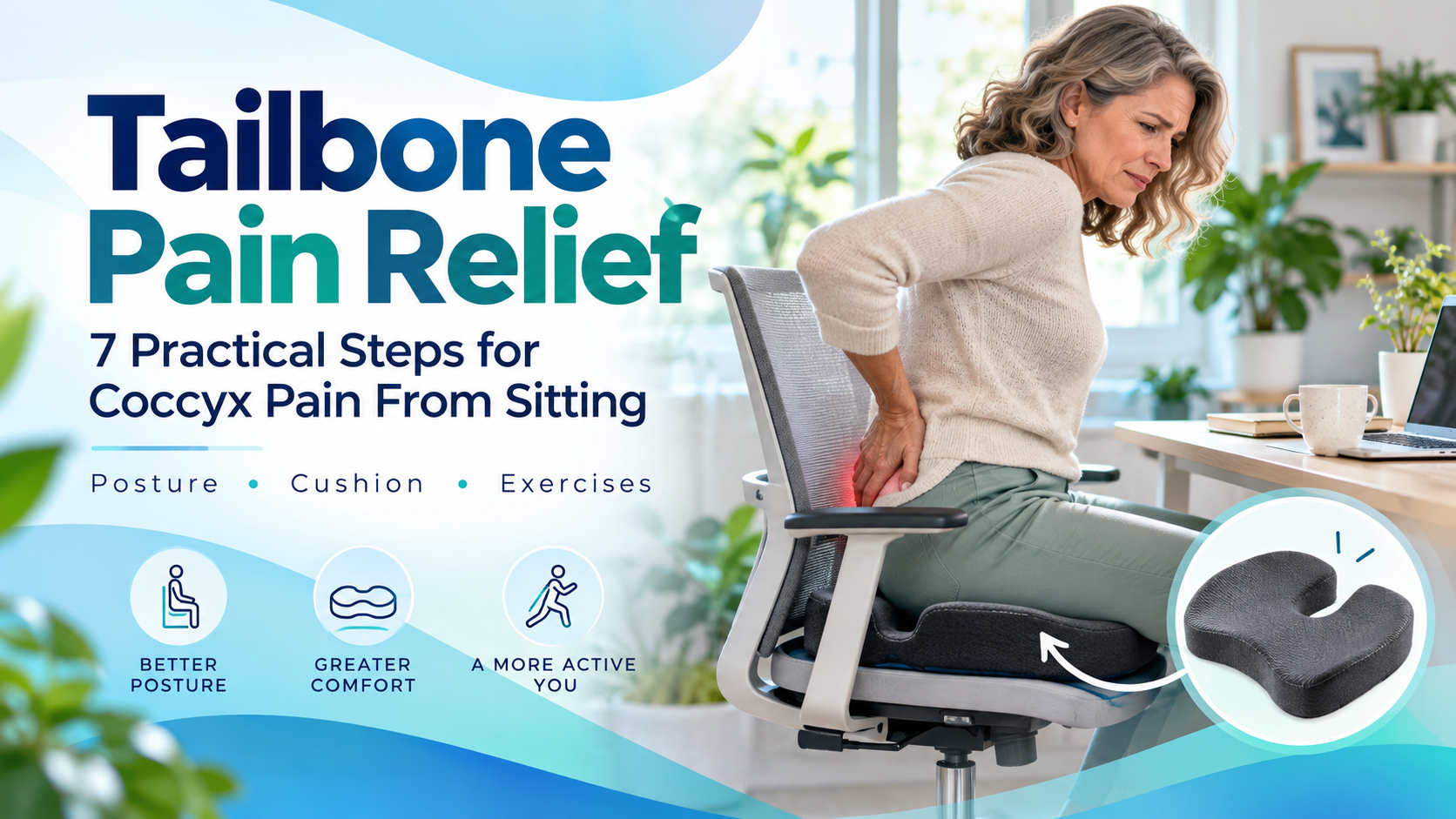
Tailbone Pain Relief: 7 Practical Steps for Coccyx Pain From Sitting
Tailbone pain, also called coccydynia, can turn working at a desk, driving, dining, traveling, or simply relaxing into an uncomfortable experience. The good news is that many cases can be managed with a combination of better sitting habits, pressure relief, movement, appropriate exercises, and professional care when necessary.
This guide explains how to relieve tailbone pain step by step, including how to choose a seat cushion for tailbone pain without relying on softness alone.
Quick Answer: What Helps Tailbone Pain When Sitting?
If your tailbone hurts when sitting, start by reducing direct pressure on the coccyx. Sit upright or slightly forward, avoid long periods of uninterrupted sitting, stand and move regularly, and consider a properly positioned coccyx cushion with a rear cutout.
Heat or ice may help depending on whether symptoms are recent or chronic. Gentle stretching and strengthening can also help some people. Persistent, worsening, traumatic, or neurologic symptoms should be evaluated by a qualified healthcare professional.
Is It Really Tailbone Pain? Understand Coccydynia First
Coccydynia is pain or irritation around the coccyx, the small bone at the very bottom of the spine. The discomfort is often very localized and may become more noticeable when sitting on a hard surface, leaning backward, or moving from sitting to standing.
Tailbone Pain vs. Sciatica vs. Lower Back Pain
Tailbone Pain
Usually centered around the lowest tip of the spine and commonly aggravated by sitting or direct pressure.
Sciatica
Pain may travel from the lower back or buttock into the leg along the path of the sciatic nerve.
Lumbar Pain
Typically occurs higher in the lower back and may involve stiffness, muscle soreness, or limited movement.
When Tailbone Pain Needs Medical Attention
Do not rely only on home care or a seat cushion if your symptoms are severe, unusual, rapidly worsening, or started after significant trauma.
- New bowel or bladder problems
- Numbness or unusual weakness
- Fever or unexplained weight loss
- Severe pain after a fall, accident, or direct impact
- A lump, swelling, drainage, or other unusual change near the coccyx
Seek medical advice promptly if any of these symptoms apply.
Correct Your Sitting Position to Reduce Coccyx Pressure
One of the simplest forms of tailbone pain relief is changing how your body loads the chair.
Slouching rolls the pelvis backward and may place more pressure toward the sacrum and coccyx. A more neutral sitting position helps distribute your body weight through the thighs and sitting bones instead of concentrating it at the tailbone.
Try These Sitting Adjustments
- Sit with your feet supported on the floor or a footrest.
- Keep your hips approximately level with or slightly above your knees.
- Avoid leaning far backward onto your coccyx.
- Try a small forward pelvic tilt if it feels comfortable.
- Use lumbar support when your chair does not support your lower back.
- Change position frequently instead of remaining completely still.
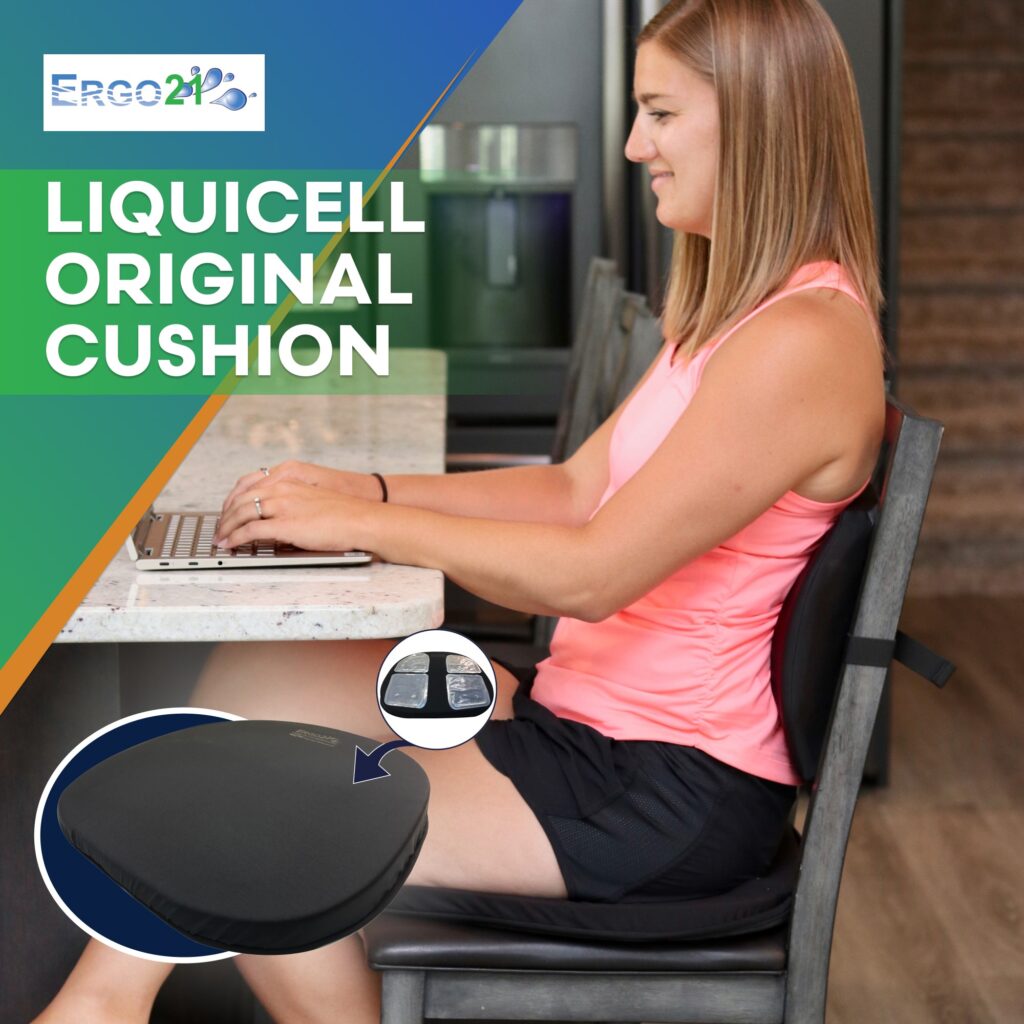
How Often Should You Stand Up if Sitting Hurts Your Tailbone?
There is no single movement schedule that is ideal for everyone. A practical approach is to avoid staying in one position for long stretches. Short, frequent standing and walking breaks may be easier on the coccyx than waiting until discomfort becomes intense.
A Simple Sitting Habit
Set a reminder to stand, walk, stretch, or change position regularly. If symptoms begin before your reminder goes off, use your symptoms as the signal to move sooner.
How to Choose the Best Seat Cushion for Tailbone Pain
Searching for the best cushion for tailbone pain can be confusing because foam density, cushion thickness, body weight, chair shape, and sitting position all affect comfort.
Instead of choosing a cushion only because it feels soft, pay attention to how it redistributes pressure and whether your coccyx is actually positioned over the pressure-relief area.
Rear Coccyx Cutout
A U-shaped or rear cutout creates space beneath the coccyx so that direct contact with the seat can be reduced.
Stable Support
A cushion should distribute weight without making you feel unstable or allowing you to sink deeply into the chair.
Correct Size
The cushion should fit both your body and the chair. An undersized seat cushion may create uncomfortable pressure around the thighs.

Ergo21 Coccyx Cushion
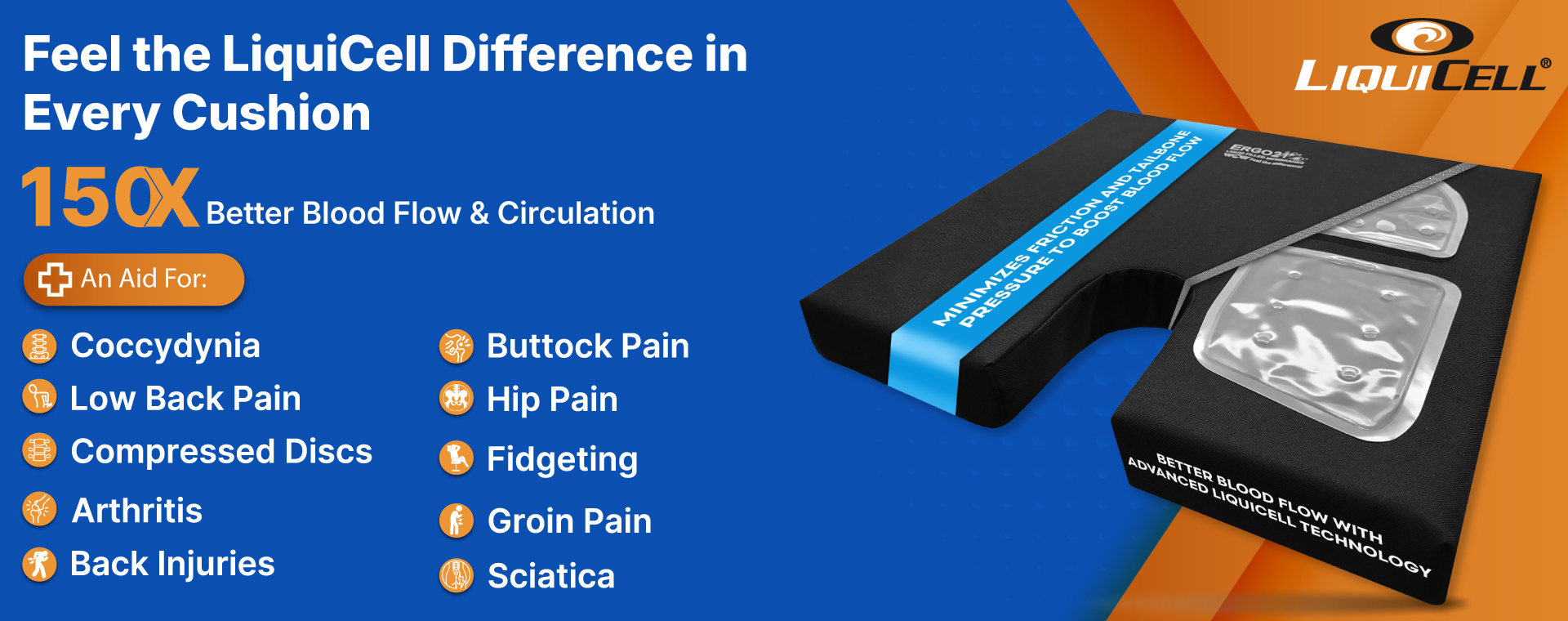
The Ergo21 Coccyx Cushion combines a rear tailbone cutout with LiquiCell liquid-filled membranes and supportive cushioning. It is available in multiple sizes and is designed primarily for seated applications such as office and dining chairs.
The important point is still fit. Position the cutout directly beneath the coccyx rather than assuming any U-shaped cushion will automatically work for every person or chair.
Coccyx Cushion vs. Memory Foam vs. Gel vs. Other Designs
| Cushion Type | Potential Advantage | What to Consider | Typical Use |
|---|---|---|---|
| Coccyx Cutout Cushion | Creates space beneath the tailbone | Cutout must be correctly positioned | Office and dining chairs |
| Memory Foam Cushion | Contours around the body | Soft foam may compress considerably during long sitting | General chair comfort |
| Gel Cushion | Can spread load across the sitting surface | Feel and stability vary considerably by design | Office, home and mobility seating |
| Hybrid / Cellular Cushion | Combines supportive cushioning with another pressure-management layer | Construction differs by manufacturer | Longer sitting sessions |
| Air Cushion | Some models allow firmness adjustment | Correct inflation and stability are important | Mobility and pressure-management applications |
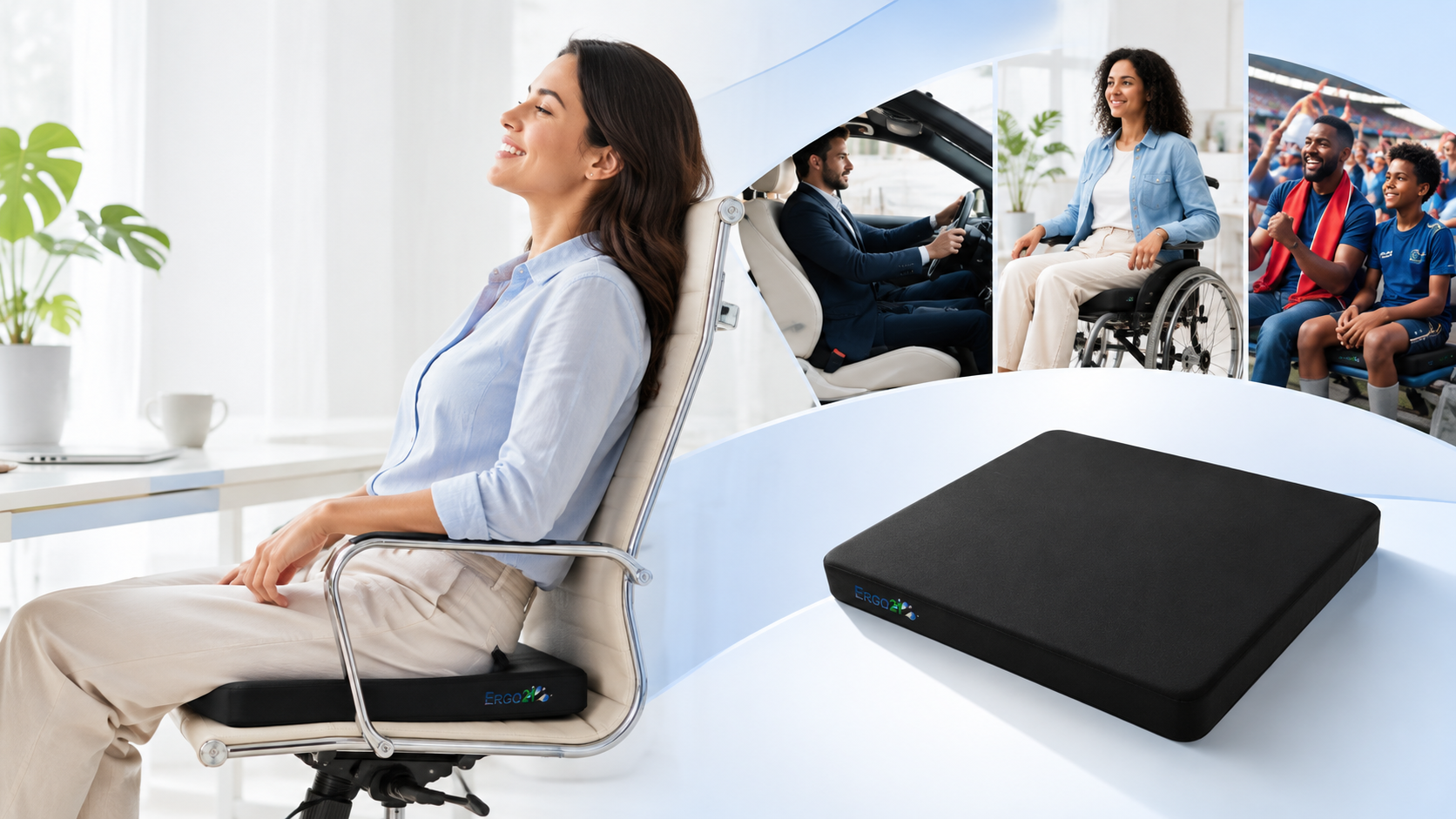
What if You Sit in a Car, Wheelchair, Recliner, or Plane?
The best cushion shape may change with the seat. A cutout cushion that works well on a flat office chair may not be the ideal design for every car seat, wheelchair, recliner, or airplane seat.
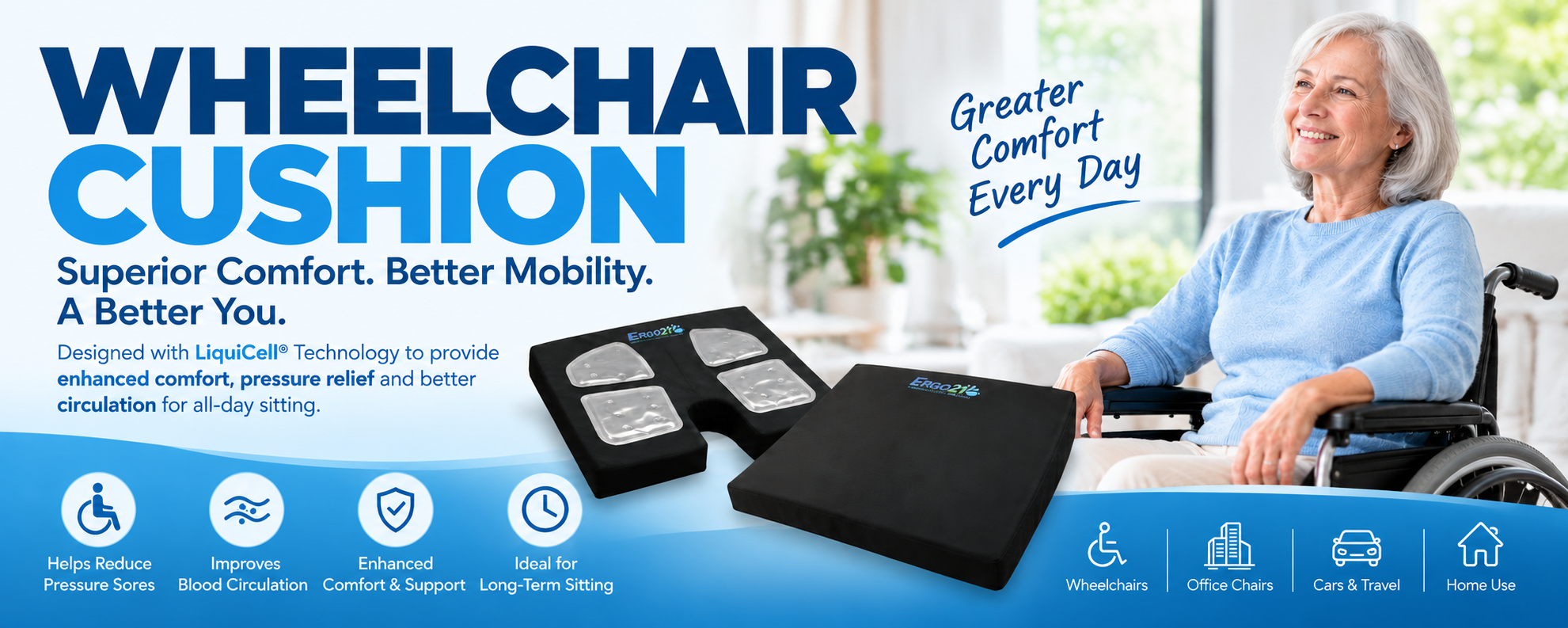
Ergo21 offers Original, Sports/Wheelchair, Coccyx, Travel and other cushion configurations for different seating situations.
Which Ergo21 Cushion Should I Buy?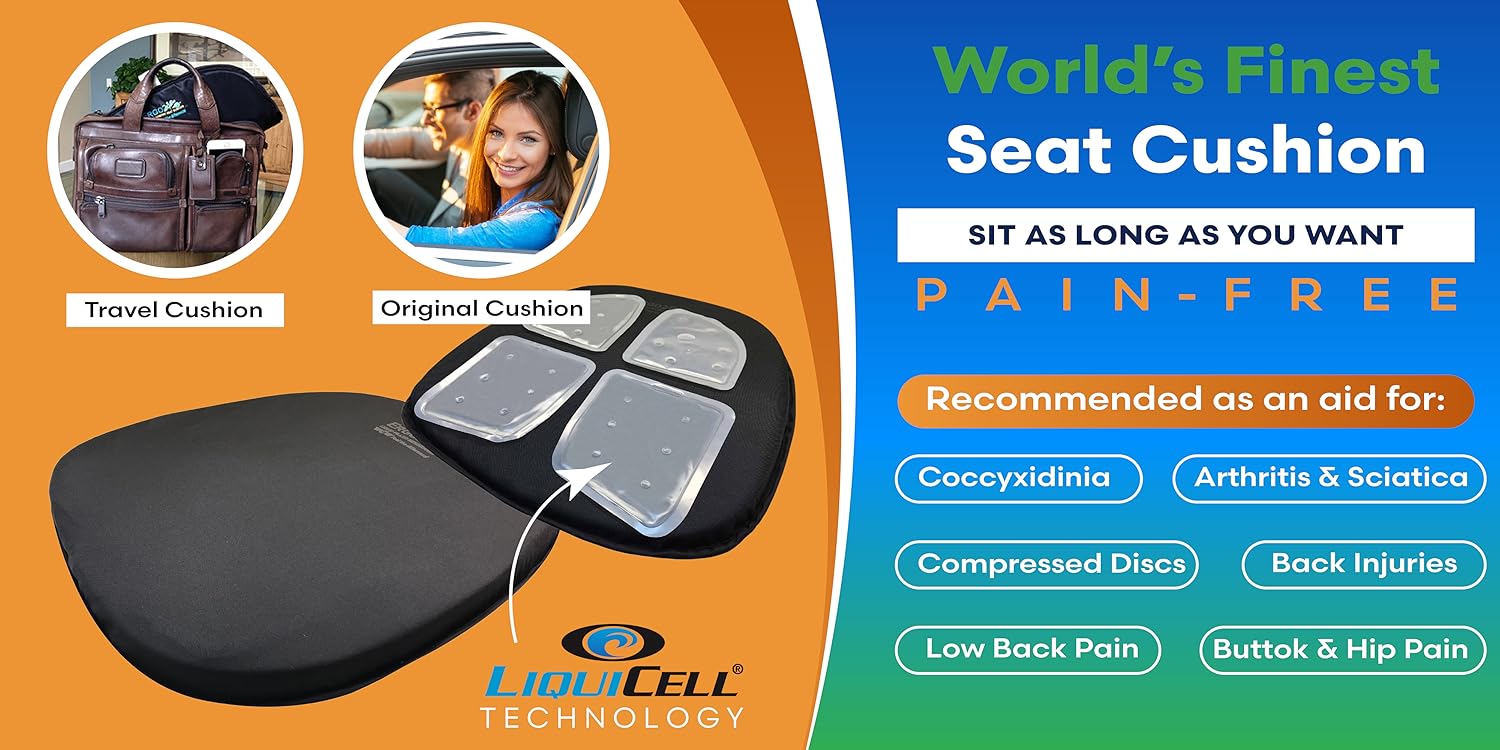
What if You Do Not Want a Coccyx Cutout?
Not everybody needs a rear cutout. Some people mainly want additional support, pressure distribution, or comfort during driving and long periods of sitting.
In that situation, a general-purpose seat cushion such as the Ergo21 Original Cushion may be worth comparing with the dedicated Coccyx Cushion.
Your body size, chair dimensions, existing seat padding and where you feel pressure should all influence the choice.
Heat or Ice for Tailbone Pain: Which Should You Try?
Ice
Cold therapy may feel helpful following a recent minor injury or flare-up. Wrap the cold pack rather than placing ice directly against the skin.
Heat
Gentle warmth may help when surrounding muscles feel tight or when discomfort has become more persistent.
Medication
Some people use over-the-counter pain medication, but suitability depends on your medical history and other medications. Ask a healthcare professional or pharmacist when unsure.
5 Gentle Exercises and Stretches for Tailbone Pain
Muscles around the hips, pelvis, glutes and lower back can influence how you sit and move. Gentle mobility exercises may therefore form part of a broader coccydynia treatment plan.
Exercise should not reproduce sharp, shooting, rapidly increasing, or neurologic symptoms.
When Physical Therapy May Help Persistent Coccyx Pain
If tailbone pain does not improve with changes in sitting, pressure relief and gentle home exercises, physical therapy may help identify contributing movement or muscular factors.
Depending on the individual, a physical therapist may assess:
- Pelvic and spinal alignment
- Hip mobility
- Glute and core strength
- Sitting mechanics
- Pelvic floor tension
- Movement habits that aggravate symptoms
For long-standing coccydynia, consider looking for a clinician with experience treating pelvic, orthopedic, or coccyx-related conditions.
How Long Does Tailbone Pain Last?
Recovery time varies considerably. Minor irritation may settle with activity changes and pressure reduction, while pain following trauma or persistent coccydynia can take substantially longer.
Rather than relying on a fixed deadline, monitor whether symptoms are gradually improving. Pain that persists, worsens, or interferes substantially with daily activities deserves professional assessment.
Medical Treatment for Severe or Persistent Tailbone Pain
Most people begin with conservative strategies. When coccyx pain remains severe despite appropriate treatment, a physician may investigate the cause further and discuss additional options.
Injections and Nerve Blocks
Depending on the diagnosis, some patients may be considered for targeted injections or image-guided procedures such as a ganglion impar block. These require medical evaluation and are not first-line home treatments.
Coccygectomy
Coccygectomy is surgery to remove part or all of the coccyx. Because surgery has meaningful risks and recovery considerations, it is generally reserved for carefully selected cases that remain severe despite conservative care.
Which Ergo21 Cushion Should You Consider?
There is no single cushion shape that is right for every chair, body size, or sitting situation. Here is a simple starting point.
| Your Situation | Ergo21 Option to Compare | Learn More |
|---|---|---|
| Tailbone sensitivity on an office or dining chair | Coccyx Cushion | View Coccyx Cushion |
| General office, home or driving comfort | Original Cushion | View Original Cushion |
| Wheelchair or firmer seating surface | Sports / Wheelchair Cushion | View Wheelchair Cushion |
| Not sure which style you need | Ergo21 Cushion Guide | Compare All Cushions |
Frequently Asked Questions About Tailbone Pain Relief
What is the best cushion for tailbone pain?
Look for a cushion that reduces direct pressure around your coccyx, remains supportive while you sit, fits your chair correctly and matches your body size. A rear-cutout coccyx cushion can be useful when correctly aligned beneath the tailbone.
Is a donut cushion good for tailbone pain?
Donut cushions redistribute pressure differently from rear-cutout coccyx cushions. Comfort varies between people, so the important question is whether the design actually decreases pressure around the painful area without causing pressure elsewhere.
Why does my tailbone hurt after sitting for a long time?
Prolonged sitting increases continuous loading around the pelvis. Poor posture, a hard or unsupportive chair, previous trauma and individual anatomy can all contribute. Persistent unexplained pain should be evaluated professionally.
Should a coccyx cushion be soft or firm?
It should provide enough cushioning for comfort while remaining sufficiently supportive to distribute your weight. Very soft cushioning is not automatically better if you sink through it or lose stable support.
How do I sit on a coccyx cushion correctly?
Position the cushion fully on the chair and align the rear opening beneath the coccyx. Sit with your feet supported and avoid sliding far forward or reclining heavily onto the tailbone.
Can a seat cushion cure coccydynia?
A seat cushion should be considered a pressure-management and comfort aid, not a cure for an underlying medical condition. The appropriate treatment depends on why the coccyx is painful.
Can I use a coccyx cushion in my car?
Some people do, but car seats differ significantly from flat office chairs. Make sure the cushion does not negatively affect driving position, pedal reach, visibility or safe vehicle operation. A different cushion shape may fit a contoured car seat better.
When should I see a doctor about tailbone pain?
Seek professional medical advice for severe or worsening pain, significant trauma, neurologic symptoms, bowel or bladder changes, fever, unexplained weight loss, a lump or swelling, or symptoms that continue despite reasonable conservative measures.
Still Not Sure Which Seat Cushion Is Right for You?
Different chairs and sitting situations may require different cushion designs. Compare Ergo21's Coccyx, Original, Sports/Wheelchair, Travel and other cushion options before choosing.